
In this article, we'll take a look at the ERP system, explaining how it works and its biggest benefits for businesses.
What is an ERP system?
ERP system (Enterprise Resource Planning), is an integrated software system that is used to effectively plan, manage and monitor various business processes. It is a comprehensive tool that unifies information and data from different areas of the enterprise into one center.
The ERP system is like the nerve centre of the modern business environment. It ensures consistency and coordination of all activities - from production through logistics to customer relationship management. Thanks to the centralization of data, it offers business management an overall view of the organization's functioning.
How does ERP work?
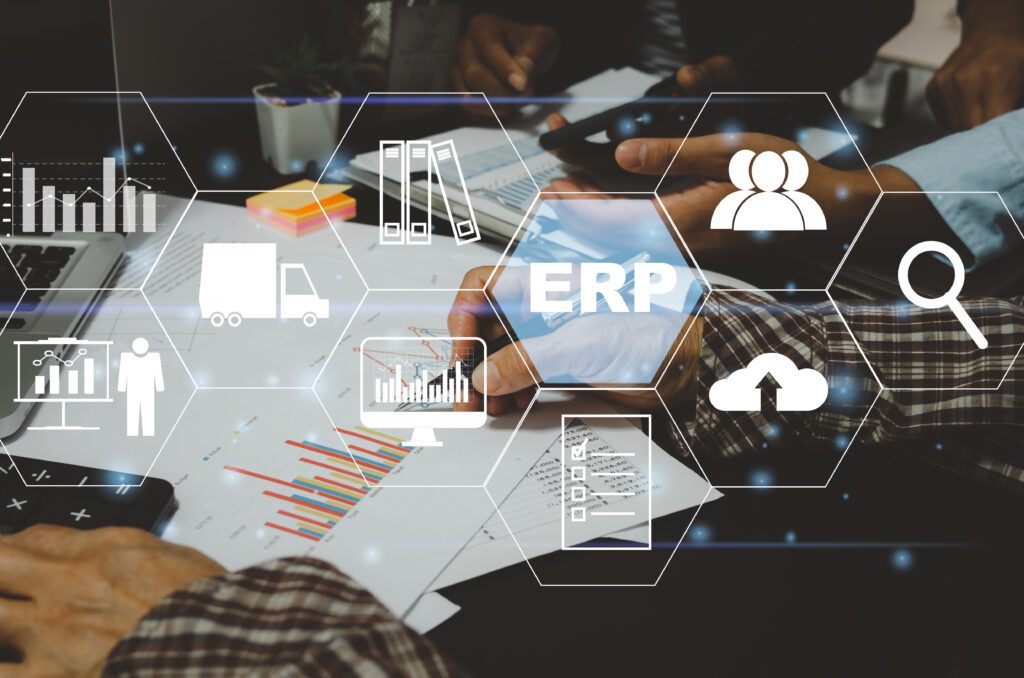
An ERP system is composed of various modules and functions that work together to integrate the various activities of a business. The main modules include:
1. Finance:
- Tracking finances: This module allows detailed tracking of all financial transactions in the enterprise. From recording income and expenses to generating financial reports.
- Accounting: Integration of accounting processes, including general ledger management, invoice recording, and tracking of tax obligations.
2. Production:
- Management of production processes: The ERP system enables the planning and management of production operations, from tracking incoming raw materials to scheduling outgoing products.
- Inventory tracking: Centralized inventory records allow fast and accurate tracking of raw material and finished product availability.
3. Human Resources (HR):
- Staff Report: Provides complete employee records, including information on employment contracts, attendance and performance appraisals.
- Wages: Automates payroll calculations, eliminates errors associated with manual payroll processes.
- Training: It monitors the training and development needs of staff, thereby contributing to the development of skills within the organisation.
4. Distribution:
- Distribution management: It allows you to track and manage the entire distribution process from storage of goods to delivery to customers.
- Warehouse tracking: Provides real-time information on current stock levels, minimizing losses associated with unnecessary storage or shortages.
5. CRM:
- Customer Relationship Management: It records and tracks all interactions with clients, allowing for a personalized approach and a better understanding of their needs.
- Marketing: It helps to plan and manage marketing campaigns, track success and gather information about customer behaviour.
Each of these modules of an ERP system plays a key role in providing overall visibility and efficiency in various aspects of the business. Their integration enables comprehensive management of resources and processes in an organization.
Benefits of the ERP system
- Centralized data: One data source for all departments, eliminating duplication of information.
- Increased efficiency: Process optimization leads to faster decision-making and higher productivity.
- More precise planning: With better inventory tracking and production processes.
- Improved cash flow management: Financial tracking and invoicing processes are more efficient.
- Better customer relationship management: CRM The module helps to personalize and improve customer service.
- Reliable data analysis: Generate detailed reports and analyses for informed decision making.
- Increased transparency: Access to data enables better process traceability.
- Consistent practices: Ensures standards and procedures are followed throughout the organization.
- Better compliance: Data tracking and management for various industries.
- Improving corporate relations: Fast and accurate response to changing customer needs.
ERP system and its implementation

If you are thinking about implementing an ERP system in your business, we recommend you contact the IT experts at Amcef. Our team is ready to advise you on the most suitable ERP system, tailor it to the specifics of your business and ensure a smooth implementation. With Amcef it is digitisation of enterprises simple.
The implementation of the ERP system is as follows:
Planning and needs analysisA: Planning and needs analysis are key phases in ERP system implementation. At this stage, it is important to clearly define the goals the organization wants to achieve and identify the processes that need to be optimized. Gathering information about existing systems, employee needs and future development trends is essential for a successful implementation.
Selection of a suitable ERP system: Evaluating different options and selecting the best system to meet the needs of the business.Choosing the right ERP system is a key decision. An organization should evaluate the various options against its needs, recognize the strengths and weaknesses of each system, and consider future enhancements or modifications. The implementation should be aligned with the business strategy and support its growth and development.
Customization of the system: Configuration and customization of the ERP system according to the specific requirements of the company.Each company is unique and may have different requirements. Once the ERP system is selected, there is a customization phase where the system is configured according to the specific requirements of the business. This may include setting up workflows, modifying existing modules or adding new features as required.
Staff training: Ensuring that staff are able to work effectively with the new system. Effective staff training is essential for successful implementation. It enables staff to learn new procedures, improve their skills and minimise resistance to change. Training should be tailored to individual job roles and related to their day-to-day tasks.
Phased implementation: Splitting the implementation into phases to minimize the impact on the day-to-day operations of the business.The implementation of an ERP system should be phased and managed in stages. Phased deployment of individual modules or features minimizes the risk of errors and allows the organization to adapt to change incrementally. This reduces the impact on the day-to-day running of the business and allows better control over the whole process.
Testing: Thorough testing of functions and processes before full deployment. Testing in a real environment before full deployment is an important step. Testing all functions, integration with existing systems, and identifying potential problems allows for quick resolution before significantly impacting operations.
Deployment and monitoring: Gradual commissioning of the system and monitoring of its performance. The deployment of the ERP system should be properly planned and coordinated. A phased rollout allows immediate response to potential problems. Monitoring the performance of the ERP system is important to identify and address potential problems.
Optimization and maintenance: Regular updating and maintenance of the system to ensure its efficiency and flawless functioning.After successful implementation, regular updating and maintenance of the ERP system is crucial. Updates ensure that the system remains compliant with the latest technology trends and security standards, ensuring its long-term efficiency and reliability.
AMCEF - Your partner for digitalisation
The overall implementation of an ERP system represents a crucial step for organizations towards effective management and optimization of their business processes.
Amcef is just such a partner, which has extensive experience in the implementation of ERP systems and digitalization of enterprises. We offer various services such as customized software, hiring IT specialists or the total digitalization of your business.
We can provide full support at every step of the process. Amcef specializes in customized solutions that meet the specific needs of each client.